
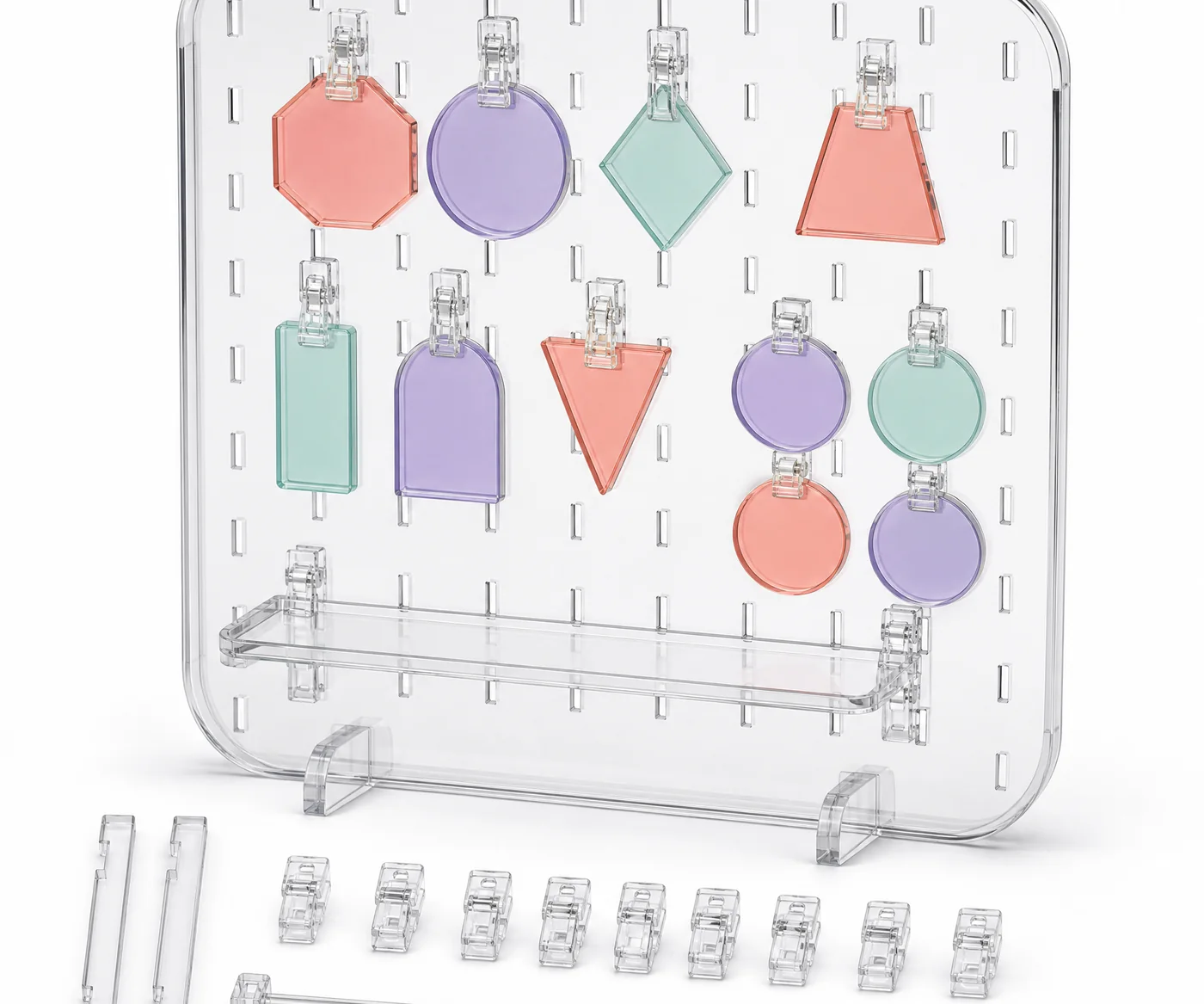
PIN-GRID sits alongside MERCH-GRID rather than replacing it. MERCH-GRID is a frame with a replaceable soft layer that accepts an enamel pin pushed straight through. That works because the soft layer grips the pin post and the badge sits flat against it. It also means every placement leaves a hole, and after two seasons of re-merchandising, a soft layer looks like a dartboard.
This panel takes the other route. Nothing pierces anything. A badge or tag hangs from a clip that grips a slot, and the slot is one of dozens on a regular matrix. Move it and the old position is unchanged.
What the pin was doing, and what has to replace it
A pin does two things at once: it carries the badge's weight and it fixes the badge's angle. Take the pin away and both have to come from somewhere else.
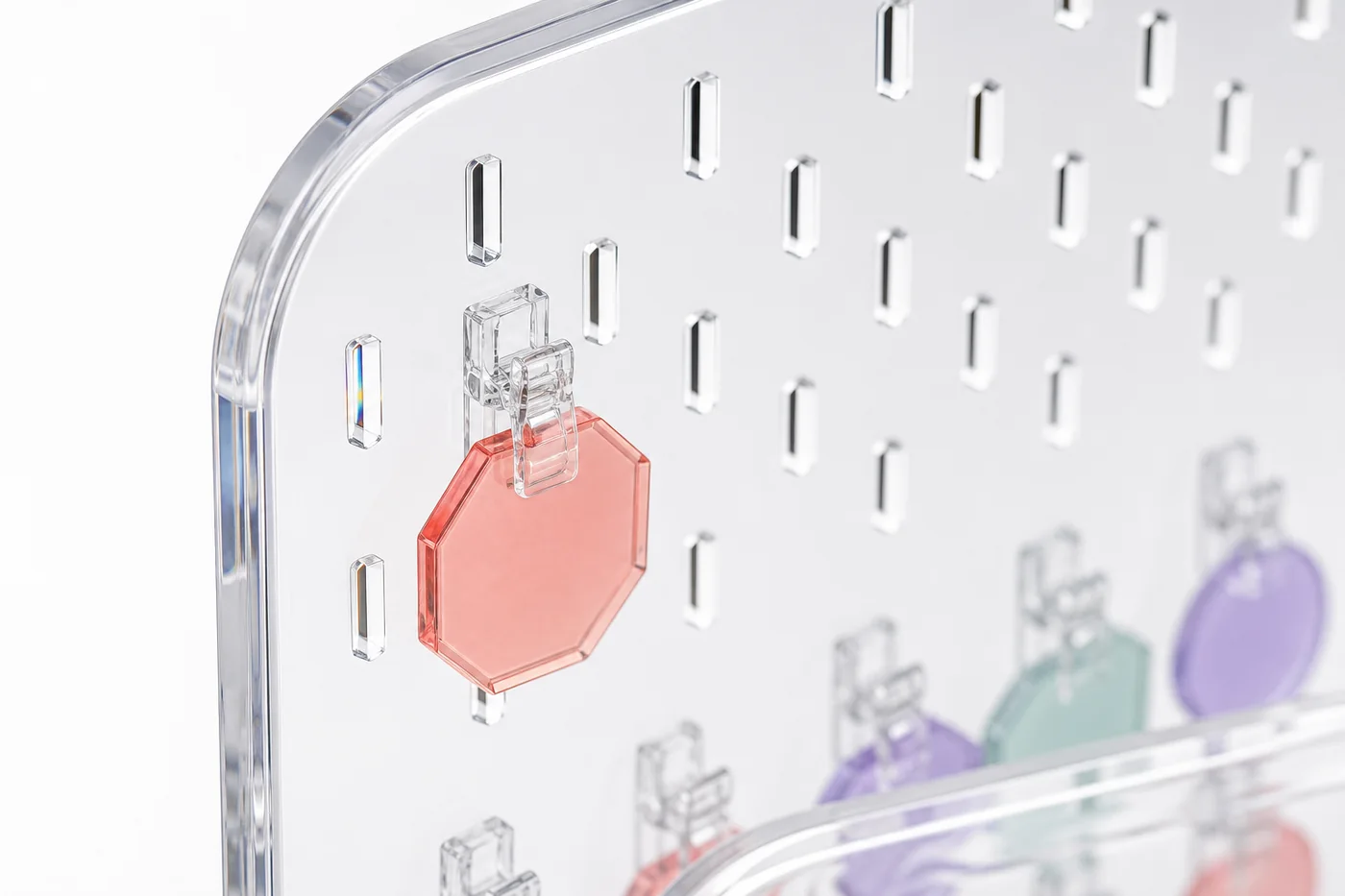
The clip handles the angle. Its jaws close on the panel through the slot, and a small shoulder above the jaw hooks the tag's own hole or top edge, so the tag hangs rather than leans. The weight goes into the panel itself, which is why the panel is rigid and the clips are not.
That is also the honest limit of the design. A clip is a friction fit, and friction has a ceiling. We do not publish a load figure for it, because we have not tested one, and a number in a brochure is not the same thing as a number from a bench.
One pitch, three fittings
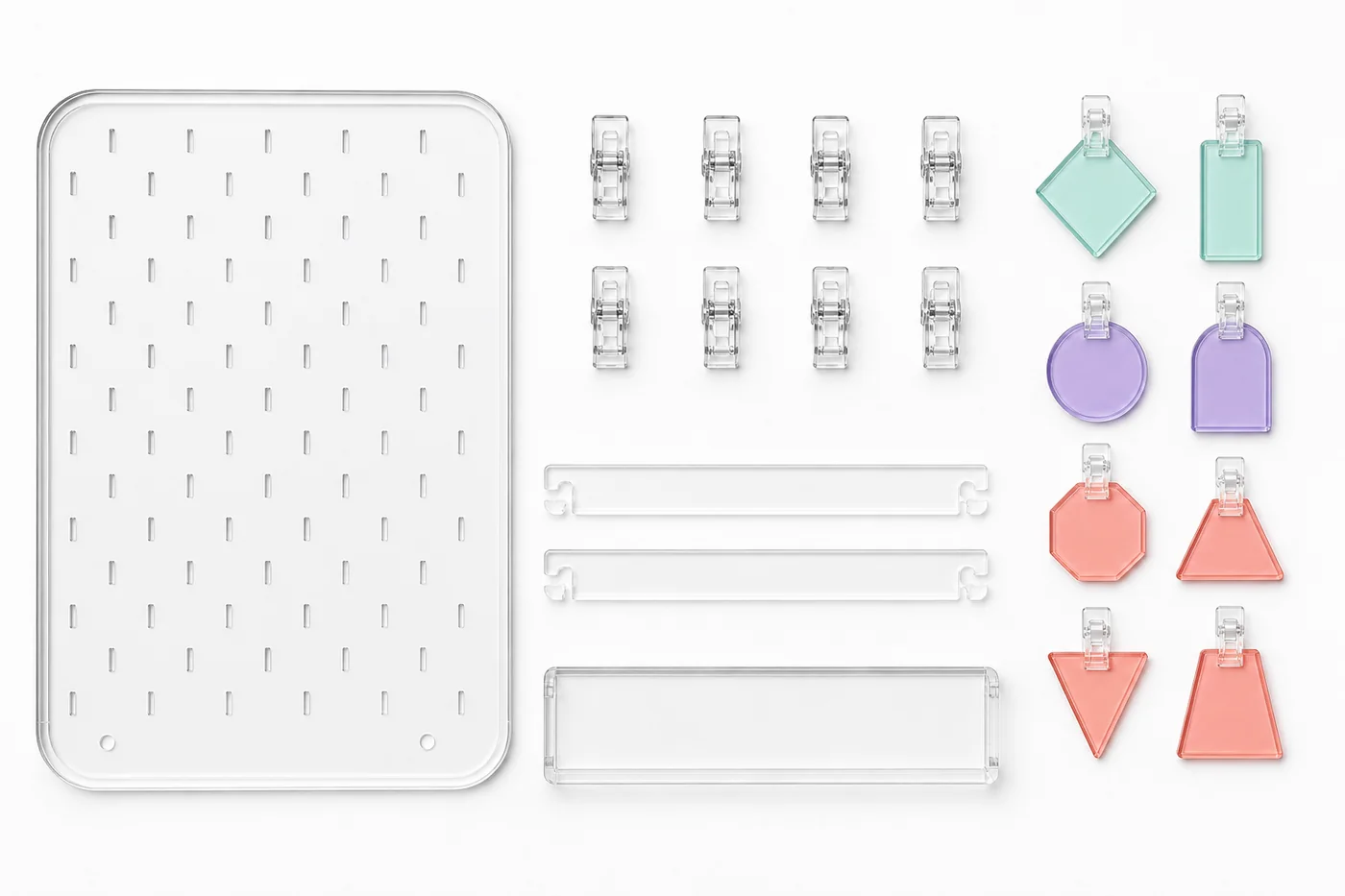
The panel has a matrix of vertical slots on a fixed pitch, and two long horizontal rails that seat in the same slots turned sideways. The vertical slot and the horizontal rail have to be the same width, or the rail will not enter; they also have to share the pitch, or a rail can only start at certain columns. Get that wrong and the system fragments into two incompatible products that look identical in a photo.
Because the fittings all read from one grid, the same panel takes a clip for a hanging tag, a rail for a row of small cards, and a shallow tray for loose badges. The tray is the one that surprises buyers: it clips to a rail and sits proud of the panel, so a customer can pick a badge out of it without unclipping anything.
Why the panel is thin, and where that hurts
The board is 2–3 mm clear acrylic. Thin is not a cost decision here, it is a fit decision: the board has to slide behind a bag's clear window, and every extra millimetre of thickness eats the space the badges need in front of it. A 5 mm board in an ita bag shows the bag's own stitching through the window.
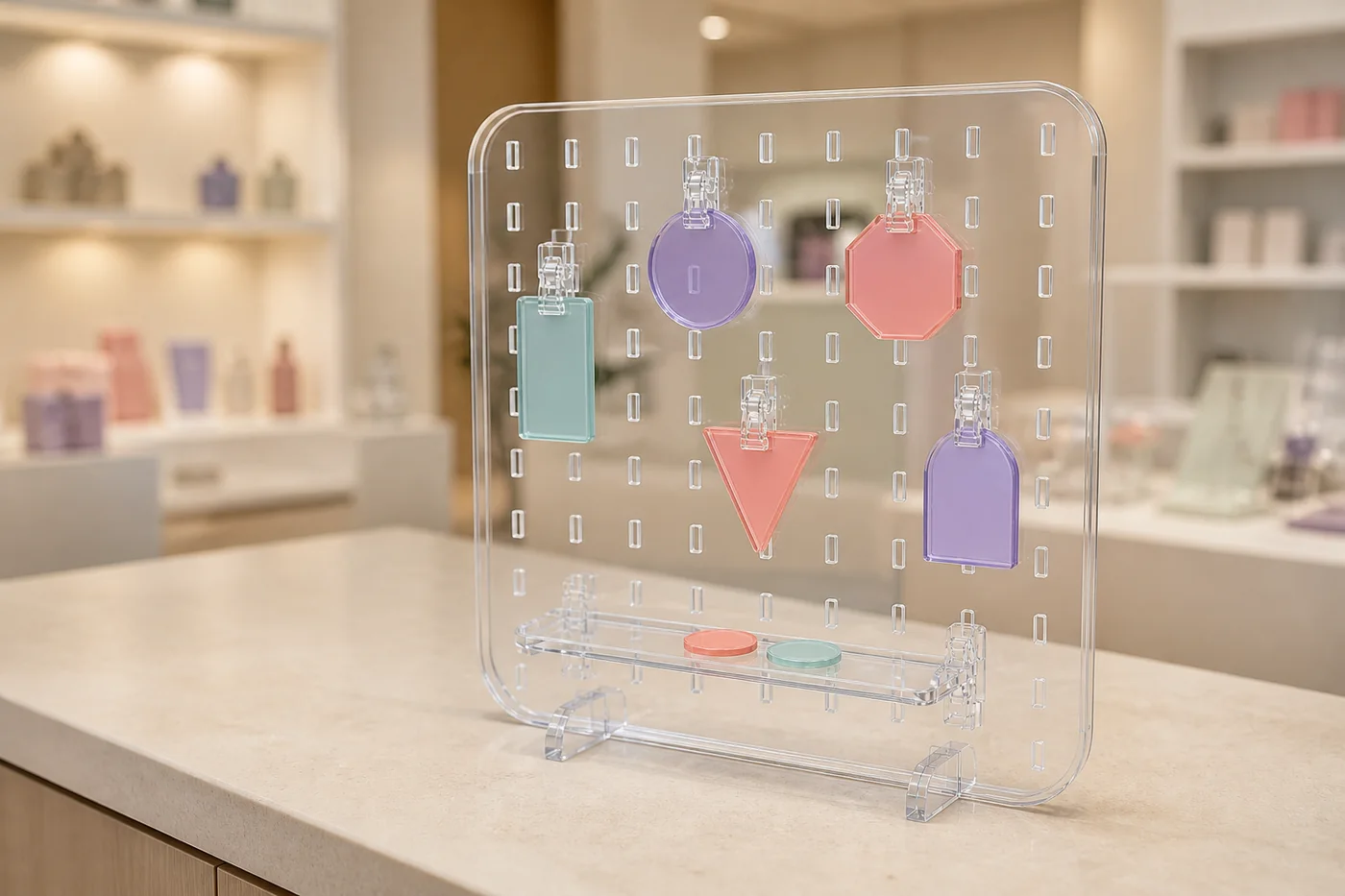
Thin panels flex, though. Cut a large board in 2.5 mm and hold it by one corner and you can feel the whole face bow, which is enough to walk a rail out of its slot. Two things manage that. The matrix itself helps, because a panel full of slots is a panel full of stiffening cuts that interrupt a long bend. The other is the feet: two angled clear feet on the bottom edge, which turn a flexible sheet into a standing object.
Corners get a radius and the edges get polished. On a 2.5 mm sheet a sharp internal corner is a crack starter, and a crack in a clear panel is visible from across a shop. Polishing also removes the white micro-chip line the laser leaves, which on clear material reads as a scratch even when it is not one.
Sizing for an ita bag, not for a table
Buyers send us the bag's outer dimensions and we have to send back a question, because the outer size is not the number that matters. What the board has to match is the clear window: its width, its height, and the radius at its corners. A board cut to the bag's outside dimensions will not go in through the opening.
There is a second fit that gets missed. The window has its own thickness, and the board sits behind it. If the board is thick and the window is tight against the fabric, the badges in the middle of the board press against the window and the whole face bulges. Buyers usually solve this by going down one size on the board and one tier down on the clip. We would rather plan it in the drawing than discover it at the sample stage.
Where it is the wrong answer
Heavy metal merchandise is out. A die-cast keychain on a friction clip is a lever, and no clip we make is intended for that. Badges, acrylic tags, cards and small charms are the working range.
Bags without a rigid window are also out. A soft tote with a fabric panel gives the board nothing to press against, and it will sag at the bottom corner no matter how the feet are cut. And if a buyer wants the pin-through look, with badges sitting flat on a soft face, MERCH-GRID is the correct product and this one will disappoint.
What to send for a PIN-GRID quote
- The window opening you are fitting, measured inside the stitching, with the corner radius
- What hangs on it: badge sizes, tag sizes, and whether you need trays
- Whether the board is for a bag, a counter, or both
- Panel size tier, S, M or L, and the thickness you want to try
- Whether the panel should be plain or carry a printed border
MOQ starts at a single set for a sample, runs 30–50 for a small batch and 100+ for mass. Allow 15 days for sampling and 25 for production, counted from confirmed artwork and deposit. Quoted on request, and the sample is where the clip fit gets decided. The rest of the modular range is on the MERCH-GRID page; send window dimensions through the enquiry form and we will come back with a board size.