
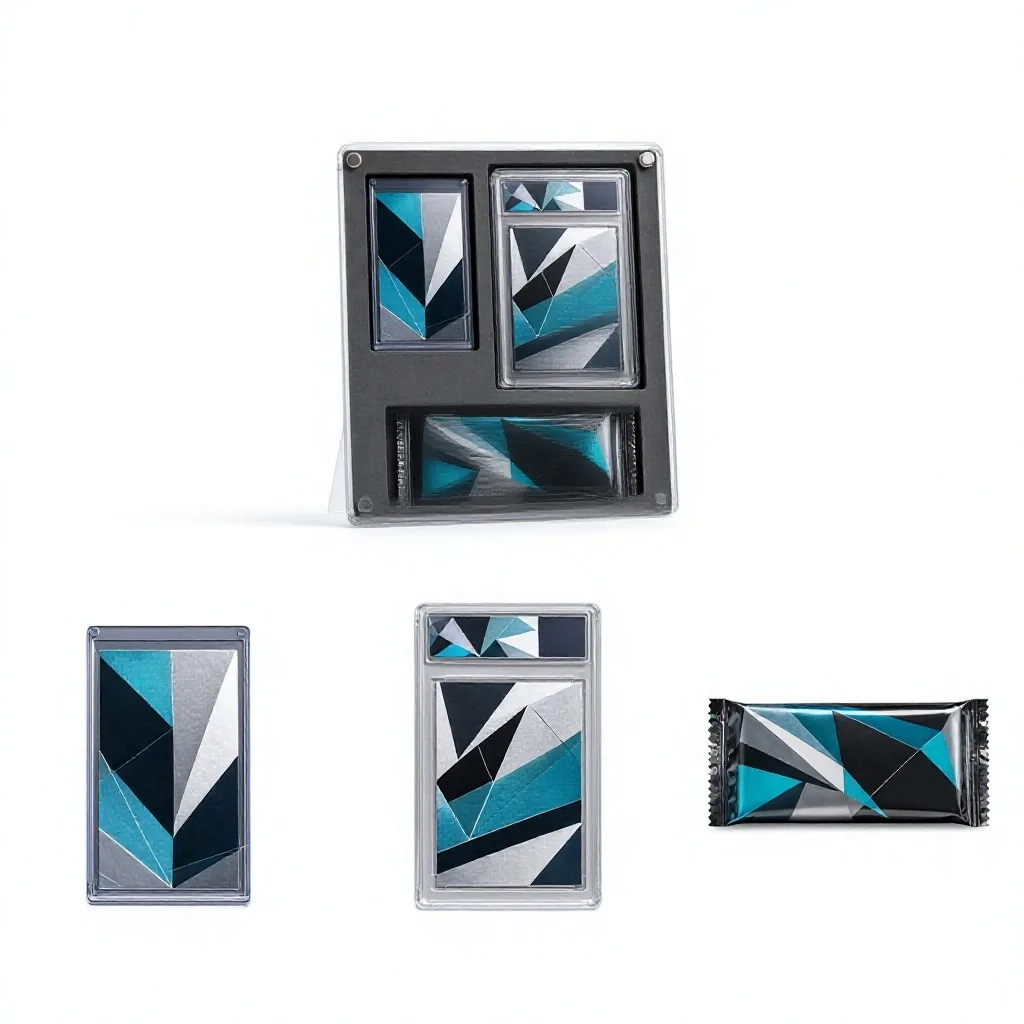
The brief behind CARD-VAULT FLEX is easy to say and fiddly to ship: hold a sleeved card, a graded slab and a sealed booster pack in one frame, and let a shop switch between the three without buying a different case for each.
A sleeved card is 1.5 mm thick. A graded slab is 10 mm. A booster pack is 8 mm and crimped at both ends. They do not sit the same way, and a single slot sized for one will mistreat the other two. That mismatch is where the whole project starts.
The FLEX is in the inserts
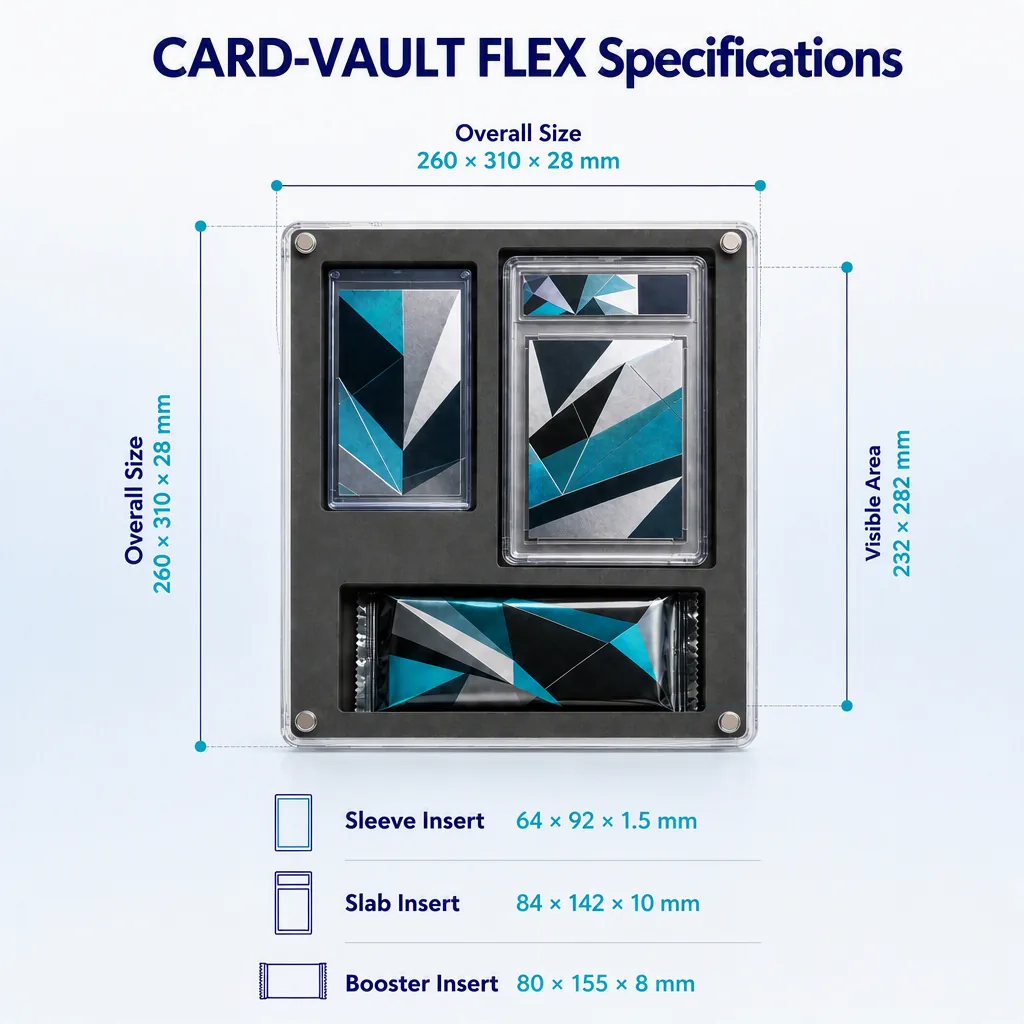
The name comes from the inner tray. The outer frame stays the same at 260 × 310 × 28 mm, and the tray is a drop-in part. Three inserts fit the one shell: a Sleeve Insert cut 64 × 92 × 1.5 mm, a Slab Insert cut 84 × 142 × 10 mm, and a Booster Insert cut 80 × 155 × 8 mm.
We cut the tray from dark grey EVA foam rather than a second sheet of acrylic. Foam grips without clamping, so a card sits still when the frame gets moved, and it gives a little when a slab runs 0.2 mm over on one side. A hard acrylic shelf does neither.
1.5 mm and 10 mm are not close enough to average. A slot wide enough for a slab lets a sleeved card lean and bow; a slot tight enough for a sleeve will not take a slab at all. Splitting them into three inserts costs more tooling up front, but it means a shop reorders inserts, not whole frames, when their stock mix changes.
Magnets instead of screws
The front cover is held by four magnets in the corners, not screws. Staff lift the panel, drop in the day's stock, and it snaps back. No tool, no hinge to sag, no thread to strip.
The trade-off is register. The panels are clear, so any misalignment reads as a double line along the edge — the kind of fault nobody notices when it is right and everyone sees when it is wrong. We check register before the panels are fixed, then again after the magnets are seated.
Desk or wall, same frame
The frame ships with a foot for the desk and keyhole holes for the wall, so the same unit works on a counter or a slatwall. Orientation is a planning point, not an afterthought: a frame that reads well standing on a counter may need the inserts flipped for a wall people pass at eye level. The cutouts stay the same; the position changes.
If a shop's collection grows into a full enclosure, the same object-first thinking runs through the MODU-BOX system. If the frame needs lighting, the interchangeable base is a separate layer rather than a rebuilt case.
Packaging does the last mile
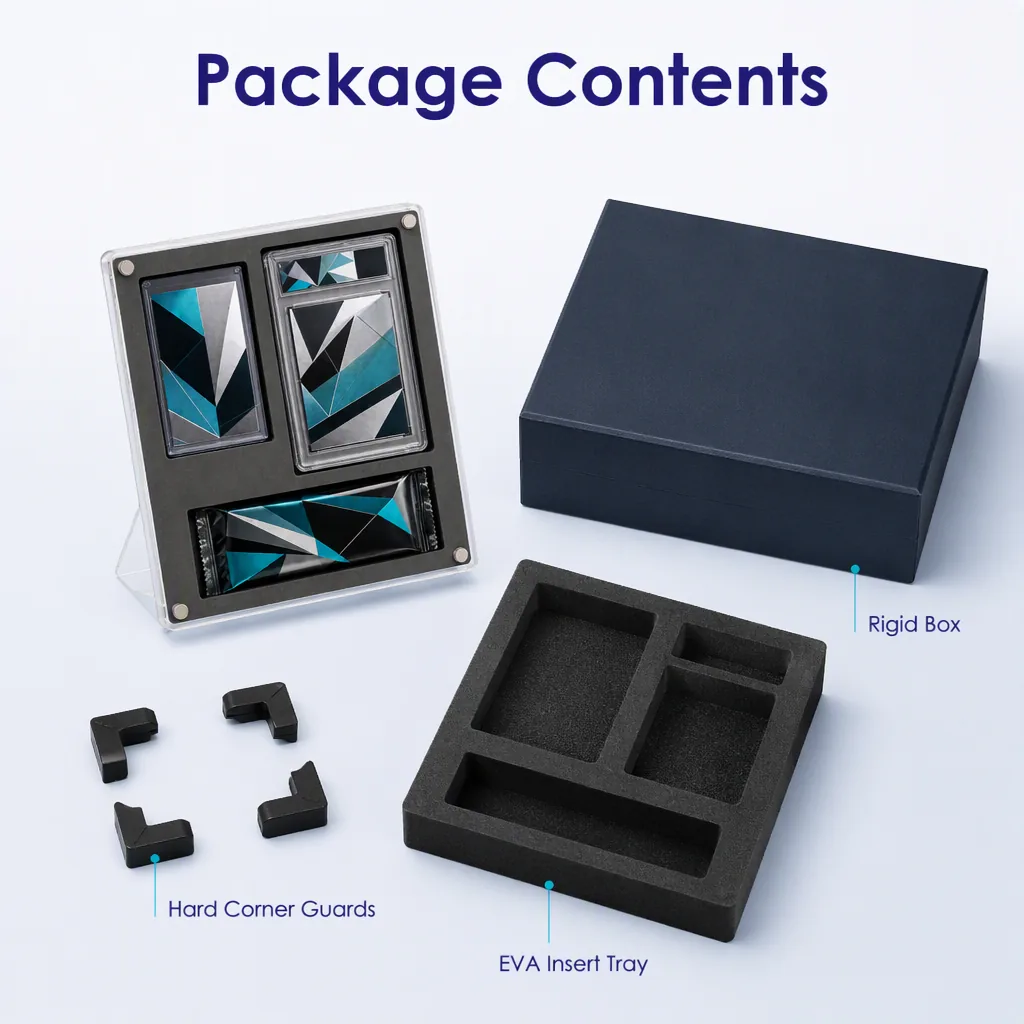
The corner guards are the part people skip and later regret. A box can land square on a corner and look untouched from the outside while the acrylic inside has a hairline crack running from the fastener. Four small guards are cheap insurance against a claim nobody wants to file.
Where it earns its keep
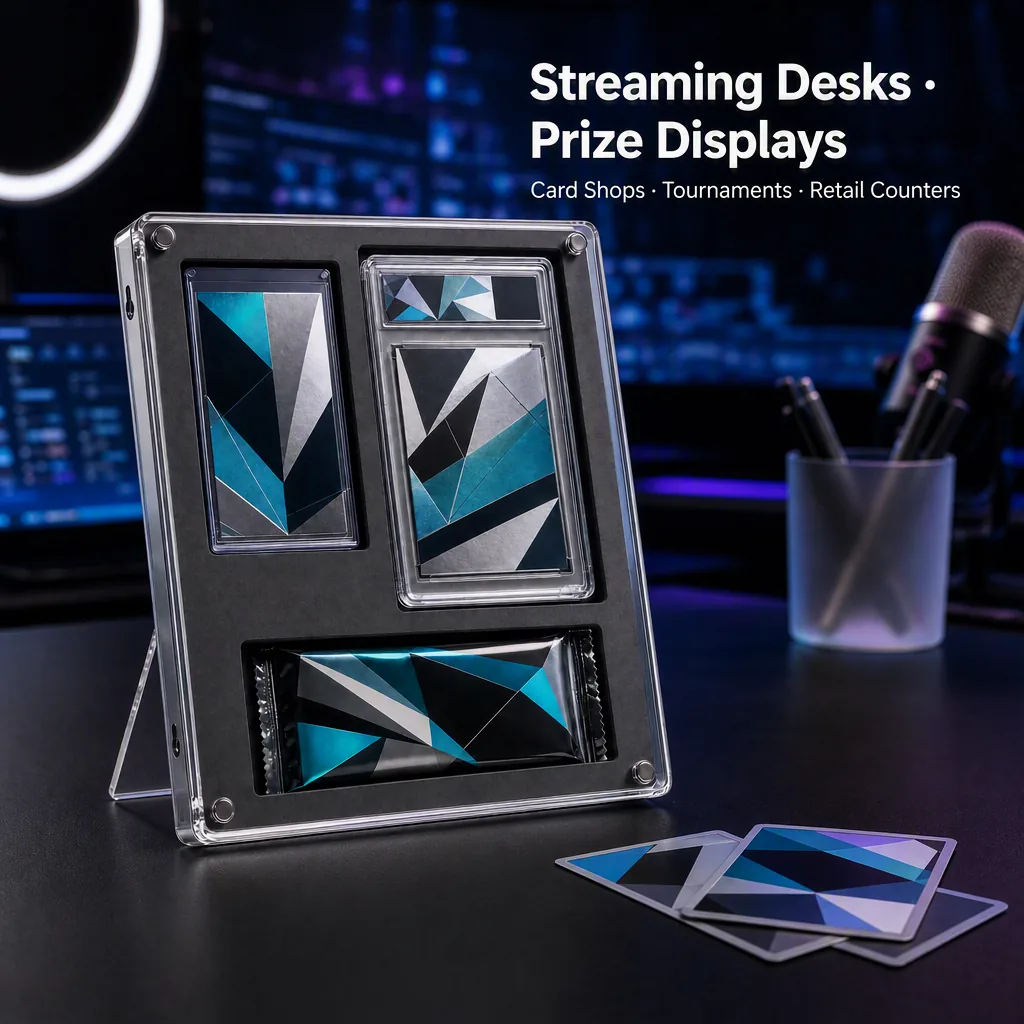
The same shell covers prizing, retail counters and a shop's own display wall. The frame is mostly air; what sells it is that the card sits level, the cover opens without a tool, and the whole thing survives being opened a hundred times a week.
What to send before we quote a custom insert
- The formats you stock and roughly how many of each
- Whether you need sleeve, slab or booster cutouts, or a mix
- Desk or wall mounting, and the expected viewing height
- Any branding on the frame or on the box
Even a rough list starts a useful conversation. The standard CARD-VAULT FLEX and its insert options are on the CARD-VAULT page, and you can send a short brief through our project enquiry form.